
Starting a food business in a hill station is different from starting one in the plains. Streets are narrower, rents vary sharply between market lanes and main roads, and footfall changes with the tourist calendar. So the first big question is not what to sell, but how much space you really need.
At Treat Corner, you can start with a compact kiosk or a mid-size outlet. Both use the same simple, chefless model, so you don’t need an experienced cook to run either. Here is how to choose.
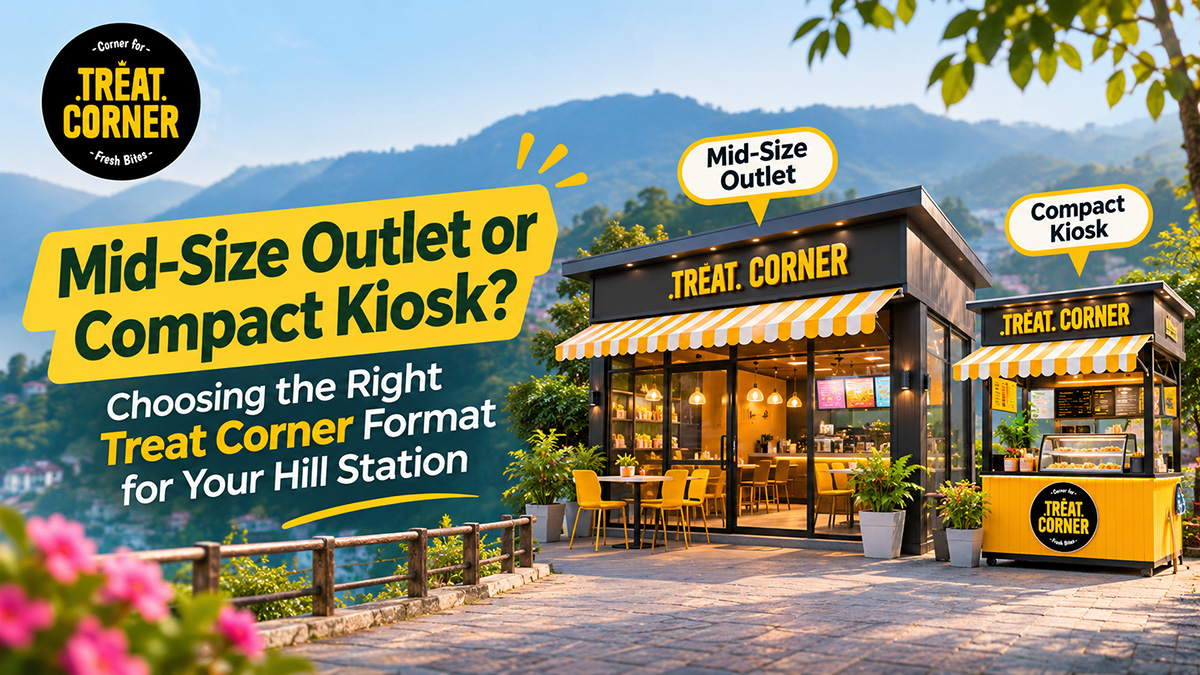
When a Compact Kiosk Makes Sense
A compact outlet is the best fit if:
- You want to keep your investment low. Smaller space means lower rent, a smaller setup cost and a faster path to recovering your money.
- You’re a first-time entrepreneur. A small operation is easier to manage and teaches you the business without heavy risk.
- The best spots are tiny. In busy hill-town markets like Police Bazar in Shillong, a small shopfront in the right lane often beats a large space on a quiet road.
- Your customers are on the move. Students, shoppers and travellers usually want quick takeaway rather than a long sit-down meal.
The main limit is seating. If most of your customers want to sit, chat and stay awhile, a kiosk may feel cramped.
When a Mid-Size Outlet Makes Sense
A mid-size outlet works better if:
- Your area has strong dine-in demand. Near colleges, offices, tourist stops and busy junctions, people often want a place to sit, especially in cold or rainy weather.
- You expect group visits. Friends, families and tourist groups spend more per visit when there is room to sit together.
- You want higher sales per day. More seats mean you can serve more people at peak hours, which matters in the tourist season.
- You have the budget and a good location. A larger space only pays off if footfall is strong enough to fill it.
The trade-off is higher rent and running costs. A half-empty large outlet can hurt more than a full small one.
Five Questions to Decide
- Who is my main customer? Locals and students lean toward compact, quick-service formats. Tourists and families often prefer seating.
- How strong is my footfall all year? If business is heavy only in peak season, a smaller outlet is safer because fixed costs stay low in the quiet months.
- What does the weather do to my sales? In places with heavy rain or cold winters, people avoid standing outside. Even a few seats can make a big difference.
- How much can I afford to invest and still keep some cash for the first few months? Never spend everything on setup. Keep working capital for rent, stock and salaries.
- Can I grow later? A good approach is to start small, build a loyal customer base, and expand or open a second outlet once the numbers support it.
A Smart Middle Path
You don’t have to pick the bigger format on day one. Many new owners begin with a compact setup in a high-footfall spot, learn what customers order and when, and then move to a larger outlet or add a second unit. In a hill station, where location matters more than size, this step-by-step approach usually carries less risk than a large upfront bet.
How Treat Corner Helps You Decide
You don’t have to guess. The Treat Corner franchise team can help you:
- Compare locations and judge real footfall
- Match the format to your budget and local demand
- Plan the layout and equipment for your space
- Train your staff on the simple, chefless kitchen process
- Support you with menu, marketing and day-to-day operations after launch
The Bottom Line
The right format is the one that fits your location, your customers and your budget, not the biggest one you can afford. Choose a compact kiosk if you want a low-risk start in a prime spot. Choose a mid-size outlet if your area has strong dine-in demand and you’re ready for higher fixed costs. Either way, the right support makes the difference.
Ready to find the right format for your hill town? Contact the Treat Corner franchise team today for a free consultation.